
Like a Rolling Stone

I remember Mary Ellen Mark staring down at my photos. I had prepared my portfolio specifically for the review that was part of this weekend workshop. I tried to breathe in and out steadily, deeply, with no sense of panic or excitement. She flipped through the photos I had accumulated, of friends, co-workers, of the world I inhabited and wanted to document in the years after 9/11. She gave a few comments on this one or that one and then she proclaimed to me, “You’re ready. Start going to the magazines.” I was nervous, but I listened to her.

"In the 50s, rock 'n roll blossomed out of the churches. It came out of black culture and Elvis was one of the first white boys to carry the banner.” Joni Mitchell
The first magazine of my dreams I applied to with my work, was Rolling Stone since I had been shooting bands for years. Eventually the same portfolio with a rejection came back to me. On official note stationary. the paper was thick, the magazine logo blazed at the top. Thanks but no thanks was all it generally said. I taped it to the side of my workstation. I kept going thinking the badge of rejection would be replaced by success but I began to shy away from submitting to the majors from that moment. I was weak. I only got weaker as the men I knew pushed past me with some unbounded confidence that I never had. If I did have it, let’s say society thought that was a bit stupid and eventually I believed them instead of my teacher, that strong, unbowed female voice.
"The second wave of rock and roll meant commercial opportunism when cute boys and cute girls—whether they could sing or not—were promoted with their faces on magazines. The teen hero was discovered. So what it's like now isn't that different from the mindless dance era of the late fifties and early sixties, which was followed by some kind of revolution." Joni Mitchell
Fast forward to today, and everyone is duly upset about the callous way Jann Wenner, one of Rolling Stone’s founders, has defended his new book on rock’s most masterful men. Apparently Wenner thinks that only white men can think intensely and smartly about their art and he said as much while defending The Masters: Conversations with Dylan, Lennon, Jagger, Townshend, Garcia, Bono, and Springsteen. Only white men deserve a place in the cannon of Jann’s world, because he knows, likes and relates to (only) them. It’s not a surprise at this point. His personal shortcomings, the ones that put his responses on auto-pilot are in his mind, among his greatest strengths. He’s rich. He’s famous. He can not be wrong.

Wenner’s defense of his worldview, is a mess. He led his defense not with his heart on its narcissistic sleeve, but with a badly calculated intellectual argument. He said, among other comments, “You know, Joni (Mitchell) was not a philosopher of rock ’n’ roll. She didn’t, in my mind, meet that test,” OK, Jann.
He could have saved himself some trouble by simply saying that this was his personal view of mastery, a very intimate book of some of the masters of rock. Instead he lazily meandered around the exploding issue and in doing so, exposed a truth that was always there, big and obvious: Wenner doesn’t care about others. Success got Wenner stuck in his young man self. Legendary success lured him into a delusion so encompassing that he didn’t think for a minute to hide intellectual laziness.
Jann Wenner couldn’t place himself in the shoes of others because he never had to do that. Wenner never imagined what it is to be a person of color, or to be a woman because that would be a trip into something complex and uncomfortable and he was too busy winning at life.
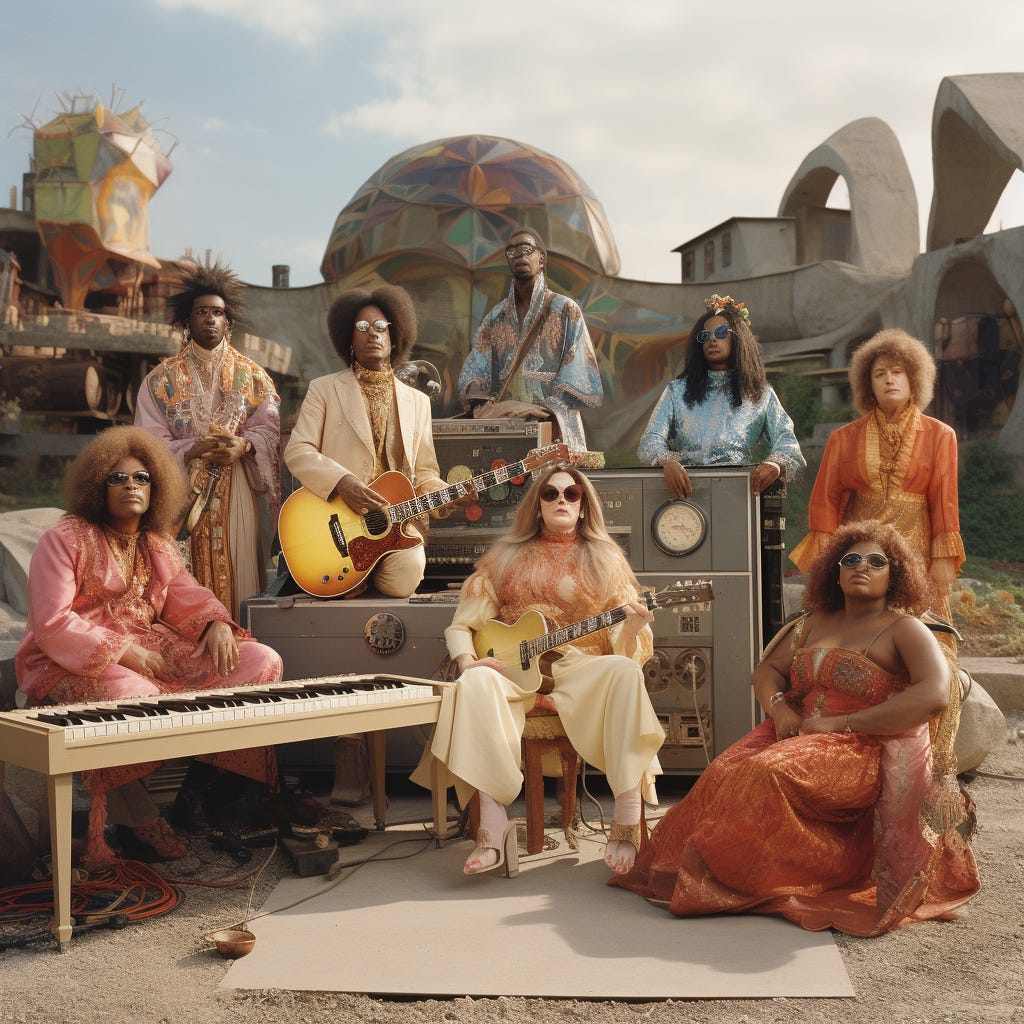
Wenner never formed an identity that included relating to anyone who didn’t look like that gorgeous, virile, masterful-in-his-own-right man staring back at him in the mirror. Wenner, often rewarded in magazine sales and dedicated readers, continued to live in his growing bubble of self-reflection.
Mirror, mirror on the wall, who is the most rock and roll of all? You are, Jann. What about sister Rosetta Tharpe? “Who?” said Jann’s mirror dryly.
Rock music was initially an innovation and rebellion of form, a fusion of gospel and blues and the technology of the electric guitar. Rock had its godmother in a black woman who people like Jann conveniently forgot when he patently ignored those who came after her.
From her innovation rock turned into an escape, into a world where men were the only real magicians, priests and shamans, where only they existed and where the rest of us served as ornaments, as objects. It’s a basic and blatant truth, one that shaped who was good enough to write the articles, edit the text and take the pictures. In that world, seemingly free from rules, there were still these invisible barriers; ones that you couldn’t see, except from what they reflected.
She’s failing because she’s just not that good.
Who does she think she is?
She’s crazy to think she can do this.
She should just shoot weddings.
She should take pictures of babies.
Imagine how it went for the others. Imagine how it went for those trying to get onto the cover. Imagine how many people never got to go on tour and returned to their small towns with those types of whispers. “Not good enough to make it.”
It’s too late for me and for others who didn’t have the stamina to be special, to fight constantly and with confidence against all the odds. Our careers are not what they could have been not because of Wenner specifically, but because of the weight of a world that created Wenner and countless others like him. Did I want to push back against these gate keepers? I sure did. Did I give up too easily. Yes, I did. But that didn’t bother anyone but me. Everyone else I grew up with was kind of self-satisfied that I had failed to break out. I had proven them correct. Who does she think she is? (A man??)
Memories from that time do flash in my mind. The Cartier box dangled in front of me by one CEO who already had a wife and a mistress. The promise of a solo show in a prominent Chelsea gallery that came with after-hours “strings,” that comes back, too. “I know you’re a great artist by the way you look at other people’s art.” said someone eyeing me up for his use.
I lived those moments, like slow-moving nightmares, so maybe by the time I got to Rolling Stone and its one offhand rejection, it was the system, not the publication, that finally wore me down. I just kept moving along, wanting to make it “the right way” often being offered the pretty woman way. No digs at the movie with that title, but it’s only cute to be saved by your looks and your great, big heart until the credits roll. In the real-life sequel it rarely ends well because the pretty girl does eventually get older, smarter and way less pretty on the outside.
Talent only gets you so far in this world. You need dedication to your craft and to your ideas. You need to stay strong and hit back at the world’s shadows with sparkling creativity. None of this may get you the dream career-making assignment. Your perseverance may ultimately yield nothing of note. But isn’t it nice to know that it might? Isn’t it nice to know that someone in power might pull down the gate and usher you in, without trying to put their hands down your pants or pat your head as if you were their little pet? Wouldn’t be nice if someone gave you the actual code to the locks, so you could enter the gate through your own strength?
It has taken me decades to share this story of a minor and very poignant shame. Although I kept up the fight for a time, in all honesty, I put them down eventually and ran towards those voices that said I had been crazy to try. It has taken me almost too long to pick up the cameras seriously and make the kind of photos I stopped making because the Wenners and their lackeys in the world were often the winners. My failure, sort of like Wenner’s success, made me lazy. I wonder if he too, got depressed.
The Jann Wenners helped to write history, and the rest of us lived at their margins, and some of us simply were not strong enough to inhabit that space. The good thing is, we aren’t all dead yet. We can share our stories so other artists don’t repeat our mistakes. We can share our stories so that these even greater mistakes of our culture, these worn out ways of being, no longer dominate the story of humankind. Full stop.
To you today, remember: Your entire life is a work of art and it is important.
Your voice has a reason for being, and you, if nobody else, might like to value that voice. You might doubt yourself, but don’t give up. Even if it’s a decade or two later, do not ever be scared to reclaim the momentum that the big picture, the big world, wanted to steal.
You might not want to admit that you caved. You might not want to examine how you let one opinion outweigh another because you too were programmed to give one type of person more credibility than another. I know I let the living, breathing voice of one of my photographic heroes be drowned out by a note paper rejection from one well known rock “bro.” Sure it came with the weight of culture, and the choking hold of my own insecurities, but something tells me you have some of those too. Don’t let them choke you.
Nobody is made of steel. Everyone gets tired holding up the weight of the culture gates. Luckily now the former emperors, like Wenner, can have and hold their own gates. They can stare into their gleaming bars, enamored with all they won and how good they looked doing it. The rest of us will be busy reclaiming our promise. We will continue moving and going with the flow of a new age. It won’t be a perfect age full of equality and appreciation for all, but it will try to do better. It’s already trying to do better, which is why these issues are noisy and full of furious comments.
"It's been a mindless superficial time but I don't think it's going to last much longer. Perhaps political and economic tensions will start people thinking again." – Joni Mitchell
You may say we are deranged and that everything before was great, but you would know you were lying. It was great for a few, and it was a stream of dangling promises in luxury boxes held just out of reach and across a gated, fetid divide for the rest of us. Let’s leave the gleaming bars behind and do our best work now, as artists, as people. If it feels like too much, breathe in and out. Maybe sing to yourself. Hear that your voice is still very much alive.
By the way, I’ve got some pertinent (in my mind) links to share and they run the gamut:
Food tidbit, because I am always hungry: The New York Times Food recipe that tops their list turns 40 years old and the recipe. (paywall removed on both).
More on Sister Rosetta Tharpe in Rolling Stone: https://www.rollingstone.com/music/music-news/yola-sister-rosetta-tharpe-elvis-interview-1373887/
More on Mary Ellen Mark: https://www.huckmag.com/article/mary-ellen-mark-3
The 1988 Interview by Andrew Watt with Joni Mitchell excerpted throughout this post: https://vocal.media/beat/joni-mitchell-interview